Latitudo Borealis

Latitudo Borealis aims to rethink timber wall assembly design in order to exploit an opportunity to reverse the normative winter heat flow across building envelopes in order to improve building performance and decrease energy demand for application in northern climates. Rather than heat flowing from inside to outside during the winter, the project has developed a series of wall assemblies that take advantage of solar radiation to direct heat from outside to inside by layering combinations of shading devices, heat absorbers, phase change materials (PCM), and cross laminated timber (CLT) panel configurations.
Prototype
2016–2017
Responsive Envelopes and Material Systems
Overview
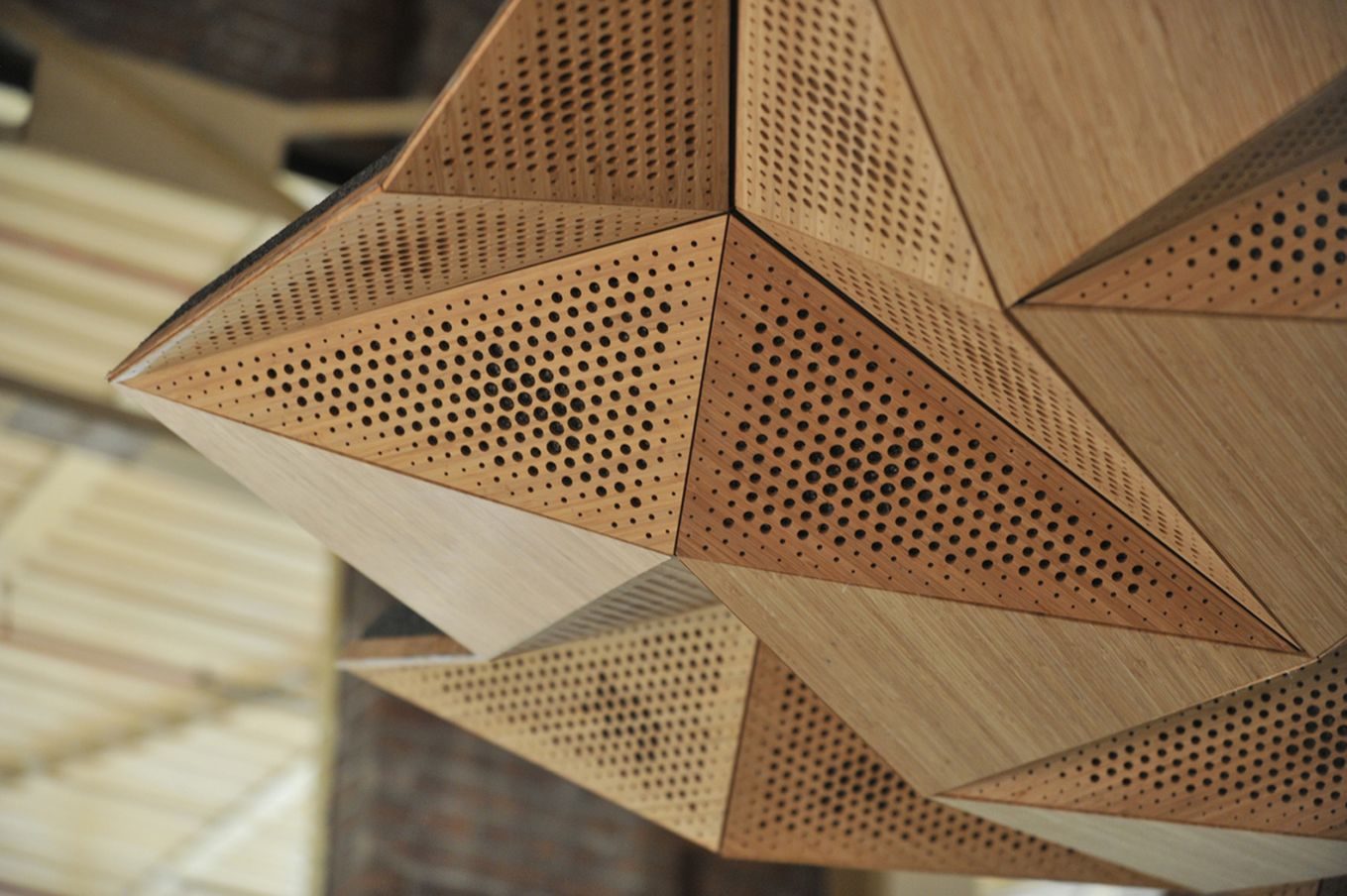
The project has advanced research on genetic algorithm optimized computational processes that use highly detailed solar radiation data to design hyper-localized shading systems that block excess summer radiation while still allowing winter radiation to enable the reverse heat flow effect. A prototypical solar shading system is fabricated robotically through the development of new tools and processes to heat-bend wood slats to produce the highly variable forms necessitated by the optimization of the shading structure.
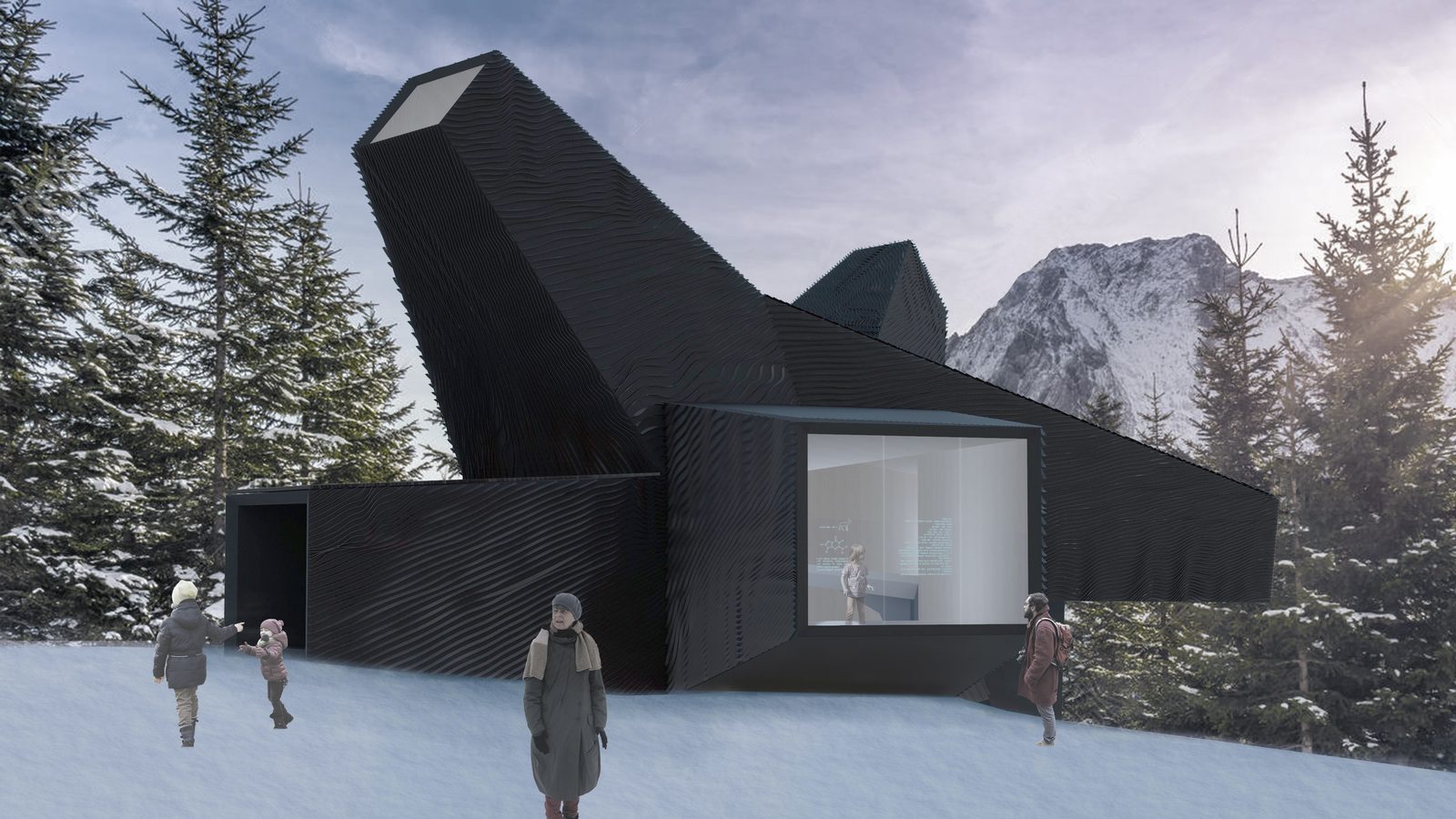
Ultimately, the project imagines these new wall section typologies and fabrication methods being deployed in timber-rich Austria, where the alpine climate is perfectly suited to capture the benefits of the reverse heat flow effect. A speculative design for the Fieldhouse pavilion located within the Erholungswald Ardetzenberg, a wilderness preserve in Feldkirch has been developed as a testbed for these technologies. Irregular volumes focus apertures through which visitors can engage the broader economies and ecologies within which the project is situated and within which the project aims to intervene.
Latitudo Borealis was developed with financial support from the 2017 Research Through Making program at the University of Michigan’s Taubman College of Architecture and Urban Planning.
Credits
Leads: Lars Junghans (primary investigator); Geoffrey Thün and Dustin Brugmann (co-PIs)
Geoffrey Thün (CoPI), Dan Tish: (Project Coordinator, Computational Design Development), Karen Toomasian, Travis Crabtree, Kallie Sternburgh, Kathy Velikov
Building Physics: Lars Junghans PhD (Primary Investigator), Deokoh Woo (Simulation and Physical Experimentation / Testing)
Robotic Fabrication: Dustin Brugmann (CoPI), Isabelle Leysens, Rachael Henry
Timber Prototyping: Mark Krecic (University of Michigan)
Scope and support
Technical Partners: Insulspan Inc.
Film
Gallery